My Research
Public-Health
Artículos relacionados
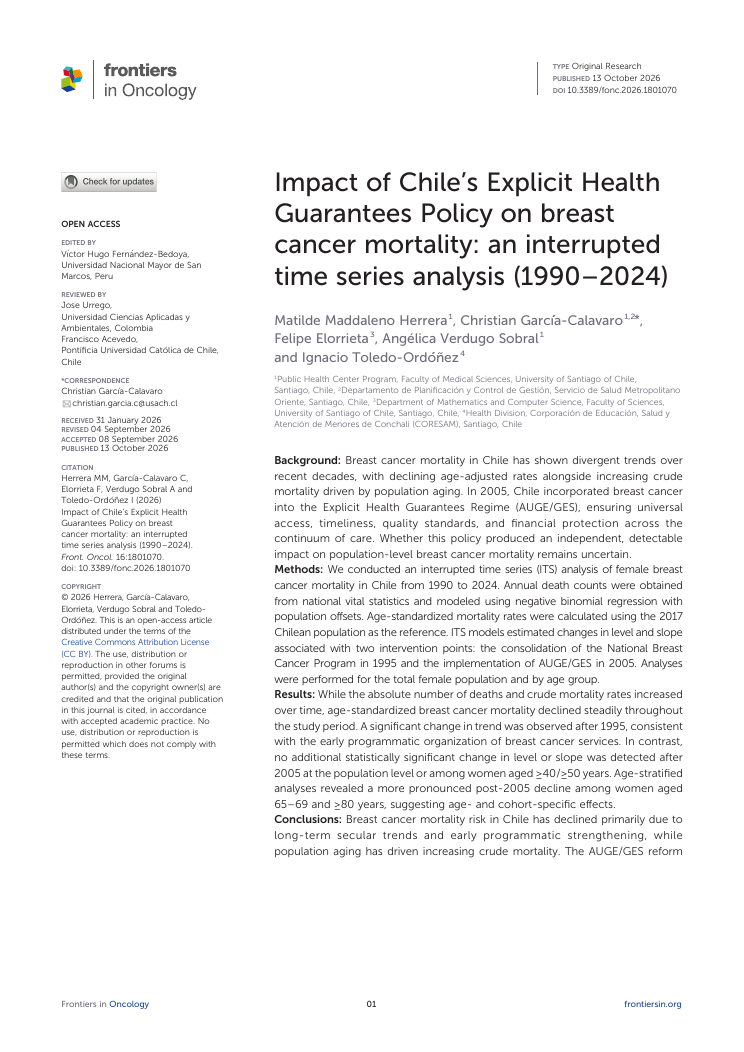
Impact of Chile’s Explicit Health Guarantees Policy on breast cancer mortality: an interrupted time series analysis (1990–2024)
Frontiers in Oncology
Ver abstract
BackgroundBreast cancer mortality in Chile has shown divergent trends over recent decades, with declining age-adjusted rates alongside increasing crude mortality driven by population aging. In 2005, Chile incorporated breast cancer into the Explicit Health Guarantees Regime (AUGE/GES), ensuring universal access, timeliness, quality standards, and financial protection across the continuum of care. Whether this policy produced an independent, detectable impact on population-level breast cancer mortality remains uncertain.MethodsWe conducted an interrupted time series (ITS) analysis of female breast cancer mortality in Chile from 1990 to 2024. Annual death counts were obtained from national vital statistics and modeled using negative binomial regression with population offsets. Age-standardized mortality rates were calculated using the 2017 Chilean population as the reference. ITS models estimated changes in level and slope associated with two intervention points: the consolidation of the National Breast Cancer Program in 1995 and the implementation of AUGE/GES in 2005. Analyses were performed for the total female population and by age group.ResultsWhile the absolute number of deaths and crude mortality rates increased over time, age-standardized breast cancer mortality declined steadily throughout the study period. A significant change in trend was observed after 1995, consistent with the early programmatic organization of breast cancer services. In contrast, no additional statistically significant change in level or slope was detected after 2005 at the population level or among women aged ≥40/≥50 years. Age-stratified analyses revealed a more pronounced post-2005 decline among women aged 65–69 and ≥80 years, suggesting age- and cohort-specific effects.ConclusionsBreast cancer mortality risk in Chile has declined primarily due to long-term secular trends and early programmatic strengthening, while population aging has driven increasing crude mortality. The AUGE/GES reform has consolidated access and financial protection, with heterogeneous benefits in older cohorts, but without generating a detectable additional inflection in national mortality trends. Further mortality reductions will require integrated, equity-oriented strategies emphasizing organized screening, timely diagnosis, and high-quality treatment across the life course.
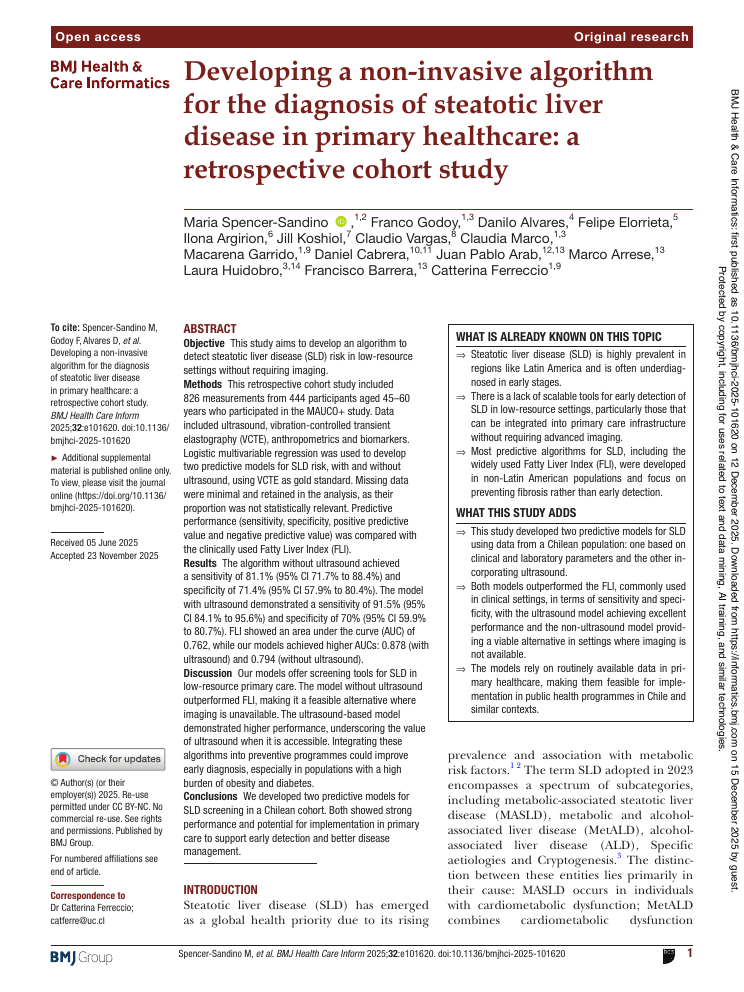
Developing a non-invasive algorithm for the diagnosis of steatotic liver disease in primary healthcare: a retrospective cohort study
BMJ Health & Care Informatics
Ver abstract
Objective This study aims to develop an algorithm to detect steatotic liver disease (SLD) risk in low-resource settings without requiring imaging. Methods This retrospective cohort study included 826 measurements from 444 participants aged 45–60 years who participated in the MAUCO+ study. Data included ultrasound, vibration-controlled transient elastography (VCTE), anthropometrics and biomarkers. Logistic multivariable regression was used to develop two predictive models for SLD risk, with and without ultrasound, using VCTE as gold standard. Missing data were minimal and retained in the analysis, as their proportion was not statistically relevant. Predictive performance (sensitivity, specificity, positive predictive value and negative predictive value) was compared with the clinically used Fatty Liver Index (FLI). Results The algorithm without ultrasound achieved a sensitivity of 81.1% (95% CI 71.7% to 88.4%) and specificity of 71.4% (95% CI 57.9% to 80.4%). The model with ultrasound demonstrated a sensitivity of 91.5% (95% CI 84.1% to 95.6%) and specificity of 70% (95% CI 59.9% to 80.7%). FLI showed an AUC of 0.762, while our models achieved higher AUCs: 0.878 (with ultrasound) and 0.794 (without ultrasound). Discussion Our models offer screening tools for SLD in low-resource primary care. The model without ultrasound outperformed FLI, making it a feasible alternative where imaging is unavailable. The ultrasound-based model demonstrated higher performance, underscoring the value of ultrasound when it is accessible. Conclusions We developed two predictive models for SLD screening in a Chilean cohort, with strong performance and potential for implementation in primary care.
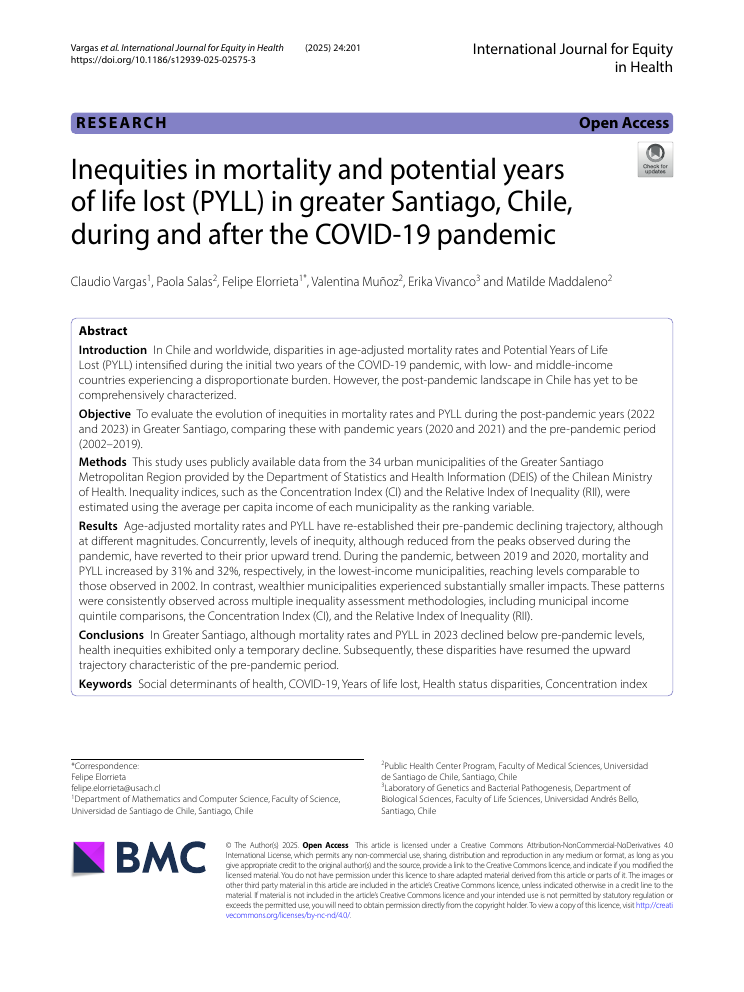
Inequities in mortality and potential years of life lost (PYLL) in greater Santiago, Chile, during and after the COVID-19 pandemic
International Journal for Equity in Health
Ver abstract
In Chile and worldwide, disparities in age-adjusted mortality rates and Potential Years of Life Lost (PYLL) intensified during the initial two years of the COVID-19 pandemic, with low- and middle-income countries experiencing a disproportionate burden. However, the post-pandemic landscape in Chile has yet to be comprehensively characterized.
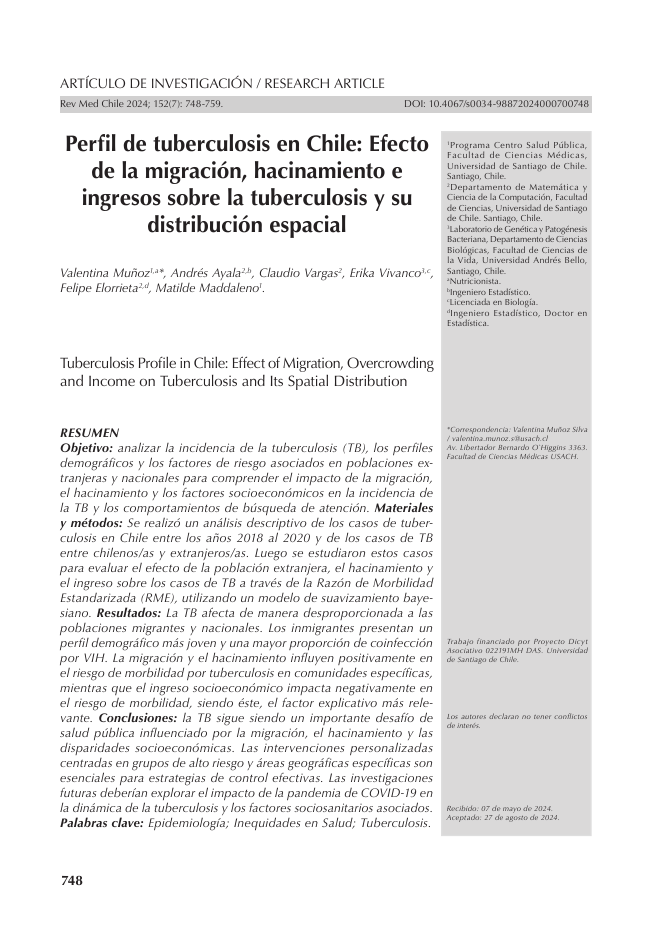
{Perfil de tuberculosis en Chile: Efecto de la migración, hacinamiento e ingresos sobre la tuberculosis y su distribución espacial}
{Revista médica de Chile}
Leer PDF ↗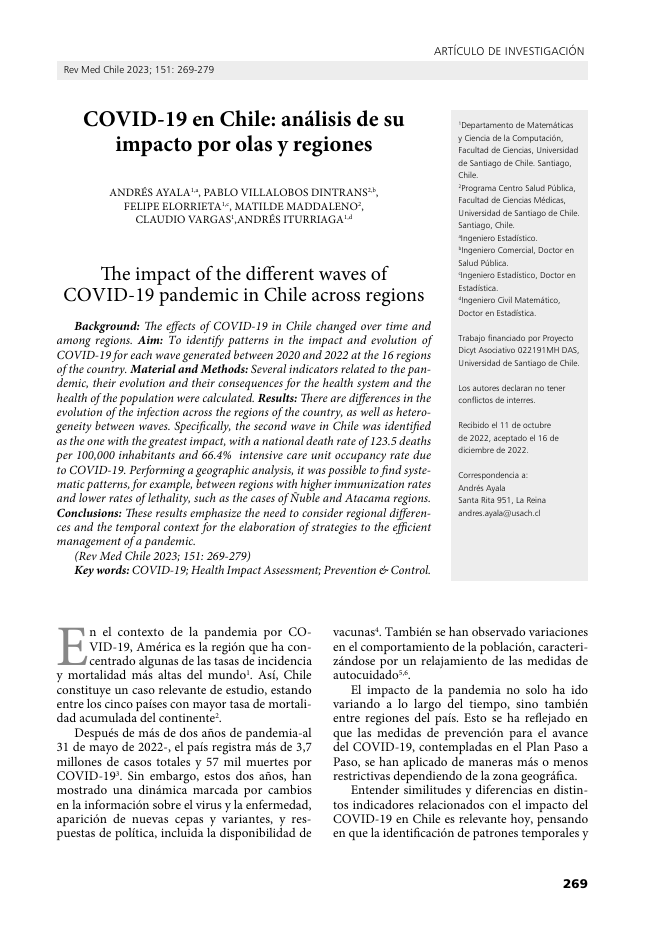
{COVID-19 en Chile: análisis de su impacto por olas y regiones}
{Revista médica de Chile}
Leer PDF ↗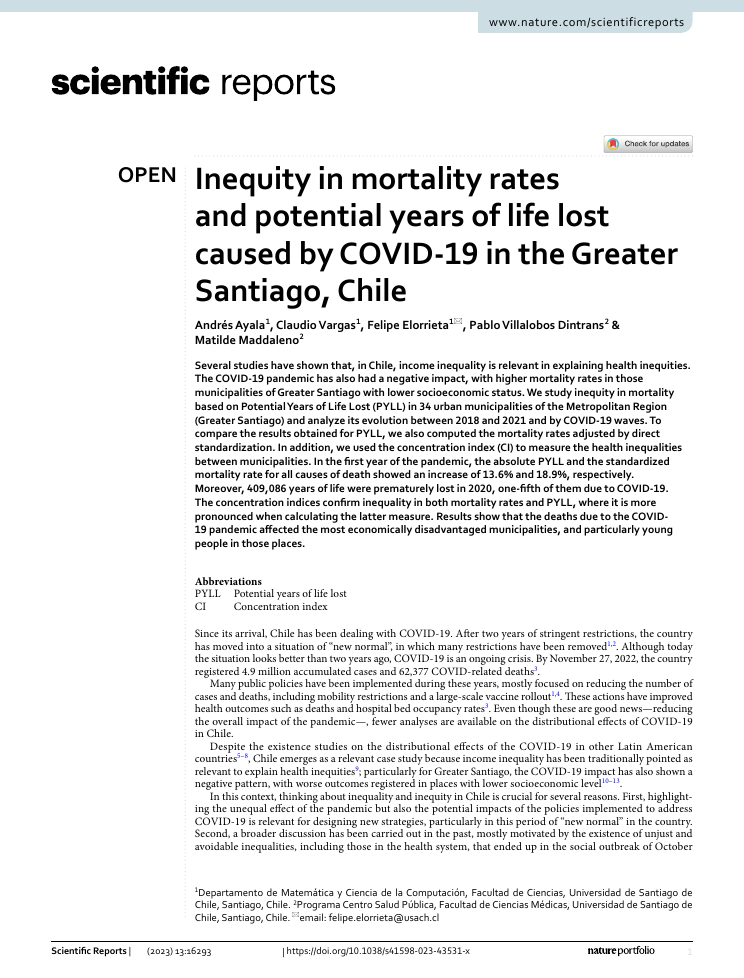
Inequity in mortality rates and potential years of life lost caused by COVID-19 in the Greater Santiago, Chile
Scientific Reports
Ver abstract
Several studies have shown that, in Chile, income inequality is relevant in explaining health inequities. The COVID-19 pandemic has also had a negative impact, with higher mortality rates in those municipalities of Greater Santiago with lower socioeconomic status. We study inequity in mortality based on Potential Years of Life Lost (PYLL) in 34 urban municipalities of the Metropolitan Region (Greater Santiago) and analyze its evolution between 2018 and 2021 and by COVID-19 waves. To compare the results obtained for PYLL, we also computed the mortality rates adjusted by direct standardization. In addition, we used the concentration index (CI) to measure the health inequalities between municipalities. In the first year of the pandemic, the absolute PYLL and the standardized mortality rate for all causes of death showed an increase of 13.6% and 18.9%, respectively. Moreover, 409,086 years of life were prematurely lost in 2020, one-fifth of them due to COVID-19. The concentration indices confirm inequality in both mortality rates and PYLL, where it is more pronounced when calculating the latter measure. Results show that the deaths due to the COVID-19 pandemic affected the most economically disadvantaged municipalities, and particularly young people in those places.
Factors associated with change in adherence to COVID-19 personal protection measures in the Metropolitan Region, Chile
PLOS ONE
Ver abstract
Personal protective measures such use of face masks, hand washing and physical distancing have proven to be effective in controlling the spread of the Covid-19 pandemic. However, adherence to these measures may have been relaxed over time. The objective of this work is to assess the change in adherence to these measures and to find factors that explain the change For this purpose, we conducted a survey in the Metropolitan Region of Chile in which we asked the adherence to these measures in August-September 2021 and retrospectively for 2020. With the answers obtained we fit a logistic regression model in which the response variable is the relaxation of each of the self-care preventive actions. The explanatory variables used are socio-demographic characteristics such as the age, sex, income, and vaccination status of the respondents. The results obtained show that there has been a significant decrease in adherence to the three personal protection measures in the Metropolitan Region of Chile. In addition, it was observed that younger people are more likely to relax these measures. The results show the importance of generating new incentives for maintaining adherence to personal protection measures.
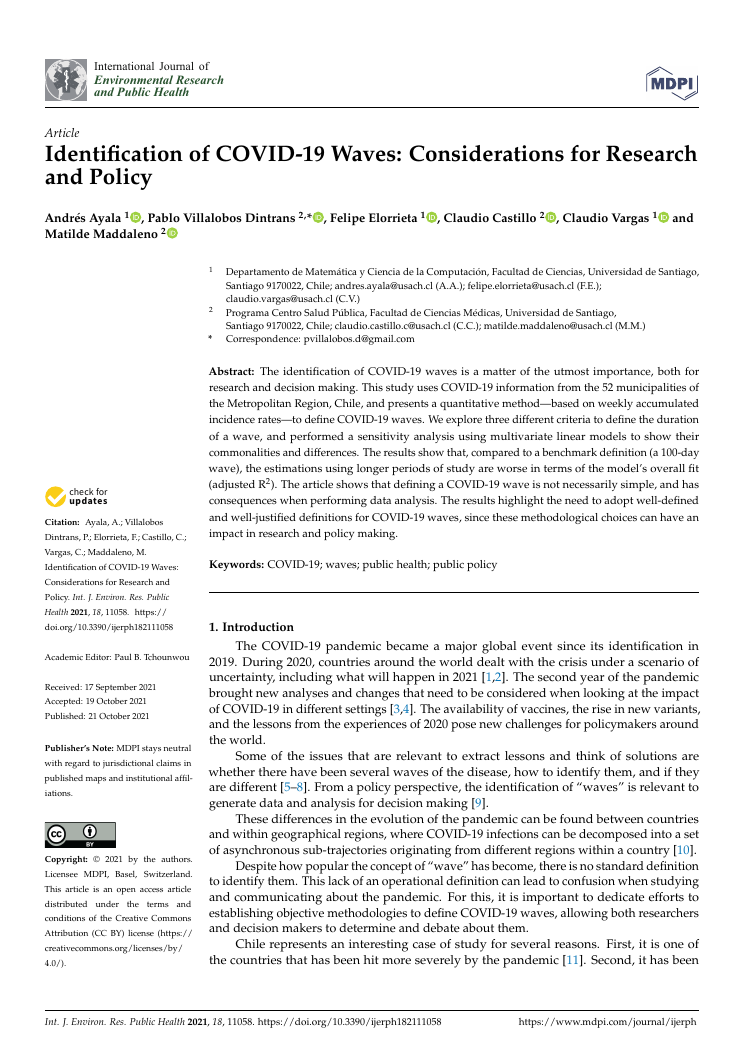
Identification of COVID-19 Waves: Considerations for Research and Policy
International Journal of Environmental Research and Public Health
Leer PDF ↗